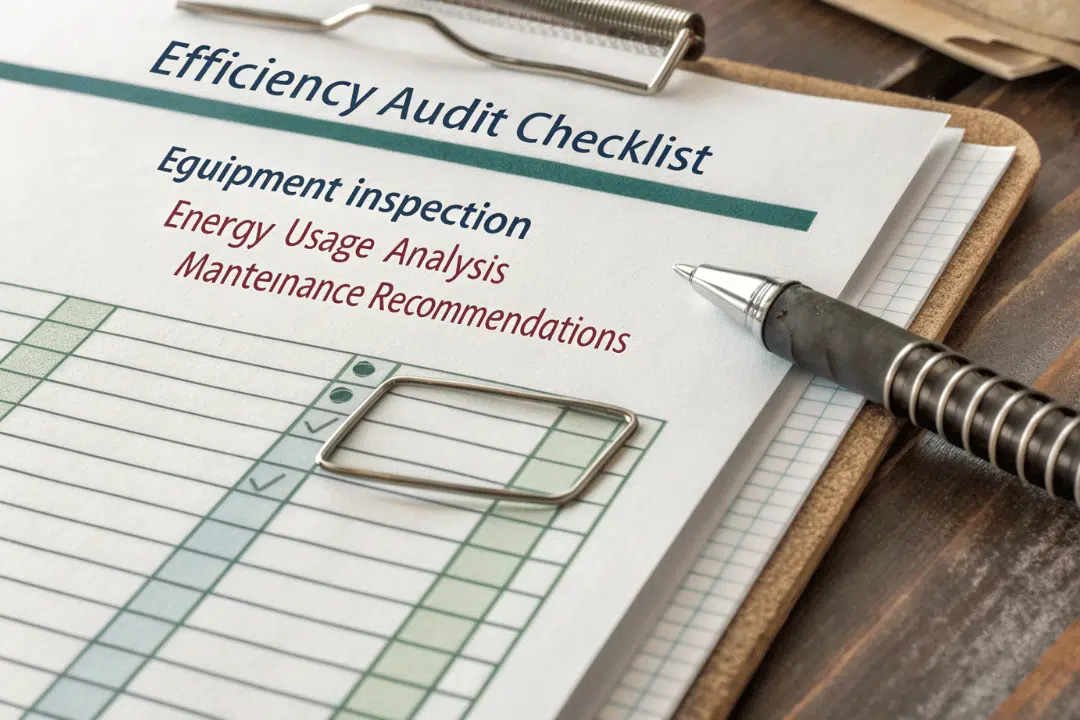
Commercial kitchens, grocery stores, and food-service businesses rely heavily on refrigeration, but many don’t realize how much power their systems waste every day. A well-performed commercial refrigeration efficiency audit can reveal hidden energy losses, excessive runtime, temperature inconsistencies, and airflow problems that drive electric bills higher than necessary. By identifying these inefficiencies early, businesses can dramatically improve performance while reducing operating costs. Many inefficiencies uncovered during audits are early indicators of system issues that later become full HVAC or refrigeration breakdowns.
During an energy review, technicians look at components like compressors, evaporators, condenser coils, seals, insulation, airflow, and thermostat accuracy to uncover issues that cause refrigerators to work harder than they should. This kind of refrigeration energy audit helps businesses understand where their systems are overworking and how simple adjustments can boost energy saving refrigeration. For even deeper insights, many businesses now use Energy Management Systems (EMS) to track real-time performance, detect energy spikes, and identify hidden inefficiencies that traditional inspections may overlook.
In this guide, readers will discover 15 essential steps to conducting an effective audit and how each step contributes to more efficient commercial fridges leading to long-term savings, smoother operation, and improved temperature consistency.
Inspecting Temperature Accuracy for Better Energy Control
Temperature accuracy is one of the most powerful indicators of commercial refrigeration efficiency. If units cool below their set point, they consume unnecessary energy; if they run too warm, food safety becomes a problem.
Check Calibration of Thermostats
Start by verifying whether the thermostat matches the actual internal temperature. Misaligned sensors force units to run longer, reducing overall energy saving refrigeration throughout the system.
Use EMS Tools to Monitor Temperature Trends More Precisely
Energy Management Systems allow businesses to monitor temperature patterns far beyond what standard thermometers can detect. EMS data often reveals issues such as nighttime overcooling, system short cycling, or temperature fluctuations caused by staff access habits. This real-time monitoring strengthens any refrigeration energy audit and makes it easier to maintain long-term commercial refrigeration efficiency.
Evaluate Temperature Fluctuations
Sudden spikes or dips may indicate airflow blockages, damaged insulation, or defrost issues. Identifying patterns during a refrigeration energy audit helps pinpoint the exact cause of inefficiency.
Review Defrost Cycles
Overactive defrost cycles increase energy consumption and stress components. Ensuring cycles run only when necessary supports more efficient commercial fridges and helps extend system lifespan.
Accurate temperature control is a foundational requirement for effective cold chain management in food-service environments.
Improving Airflow and Component Efficiency
Airflow problems are among the leading causes of wasted energy in commercial cooling systems. Proper ventilation ensures that the system runs at peak performance and maintains consistent temperatures.
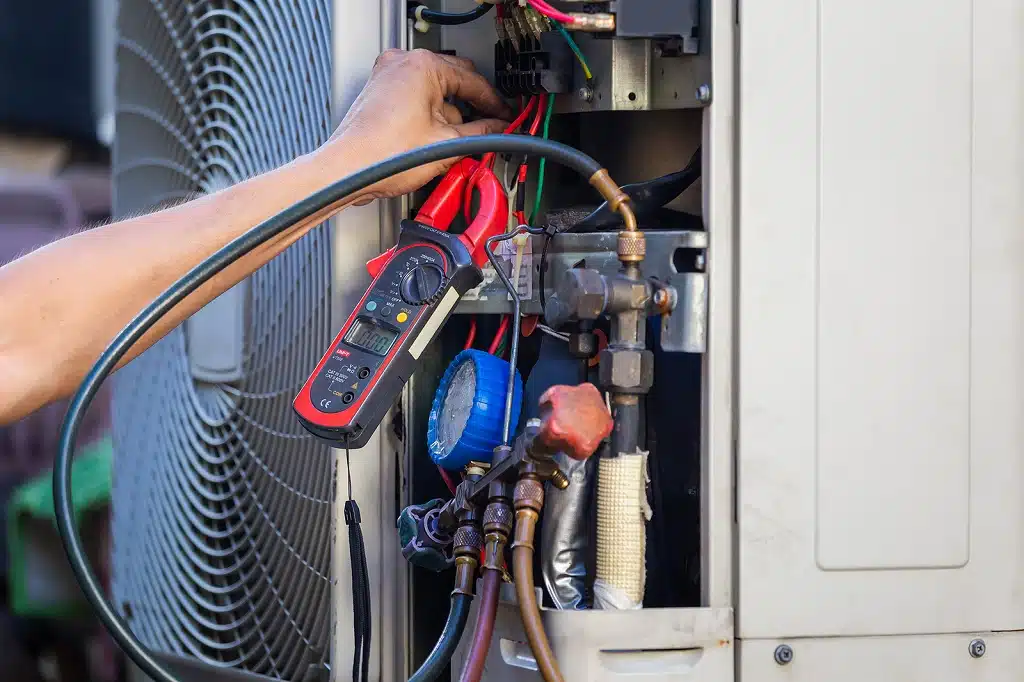
Inspect Condenser Coil Blockages
Dust, grease, and debris on condenser coils force the system to work harder. Regular cleaning significantly improves commercial refrigeration efficiency and reduces strain on the compressor.
Monitor Airflow Around Units
Units positioned too close to walls or equipment restrict ventilation. Improving clearance enhances energy saving refrigeration and reduces heat buildup that shortens component life.
Evaluate Evaporator Coil Performance
Frost buildup or ice on evaporator coils disrupts heat exchange. Addressing this early during a refrigeration energy audit prevents costly breakdowns and improves temperature consistency.
Track System Runtime Through EMS Monitoring
One of the most overlooked signs of inefficiency is excessive system runtime. With EMS technology, businesses can see exactly how long compressors and fans are running throughout the day. If runtime increases during specific hours or stays high even during low-traffic times it signals deeper problems affecting energy saving refrigeration. These same monitoring tools also support predictive maintenance strategies by flagging abnormal performance trends in real time.
Seals, Insulation, and System Structure Optimization
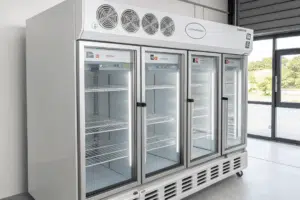
Structural issues are a silent contributor to rising energy bills. Even small gaps, cracks, or worn-out seals allow cold air to escape and warm air to enter.
Examine Door Gaskets
Damaged or loose gaskets create air leaks, forcing the refrigeration system to run longer. Replacing worn gaskets quickly boosts efficient commercial fridges and helps maintain proper temperatures.
Check Insulation Integrity
Over time, insulation loses its effectiveness due to moisture buildup or material deterioration. Poor insulation dramatically affects commercial refrigeration efficiency by allowing heat transfer where it shouldn’t occur.
Inspect Door Closers and Hinges
Misaligned or slow-closing doors allow warm air to enter the unit. Adjusting or replacing hardware enhances energy saving refrigeration and reduces compressor workload.
Electrical, Mechanical, and Operational Improvements
Even the most well-sealed refrigerator wastes energy if its electrical and mechanical systems aren’t optimized.
Review Compressor Performance
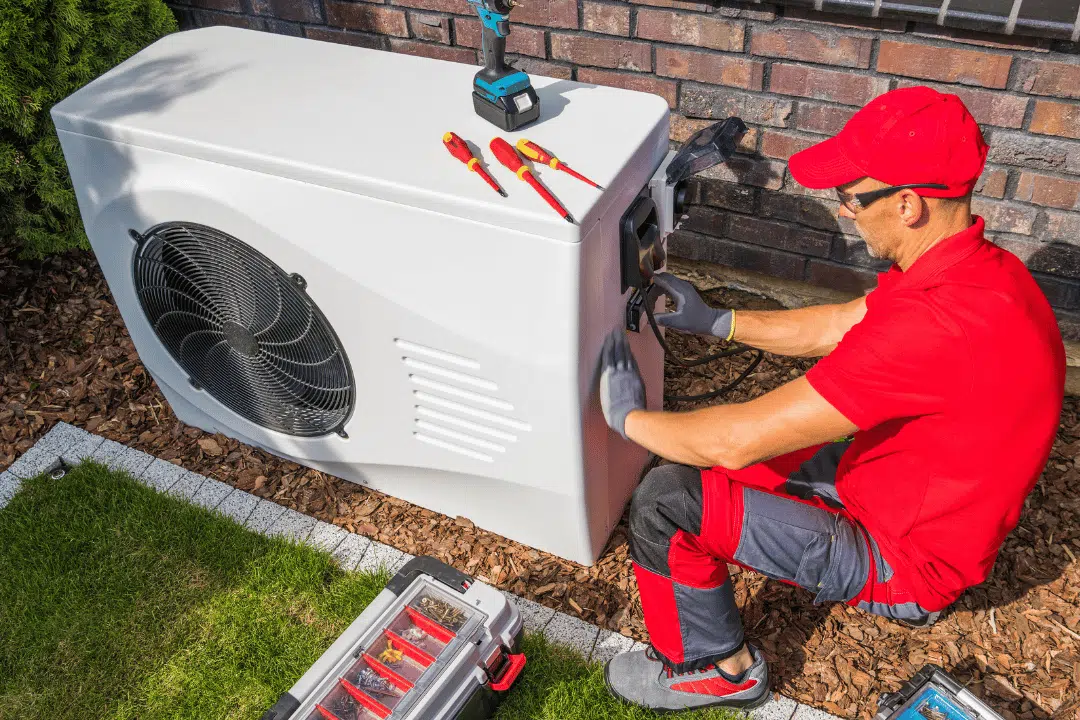
A worn or overheating compressor draws more energy than necessary. Testing its load and condition is a core step of a professional refrigeration energy audit.
Analyze Fan Motor Efficiency
Faulty or aging fan motors compromise airflow and cooling capacity. Upgrading motors increases energy saving refrigeration and leads to better circulation.
Leverage EMS Alerts for Early Performance Warnings
Modern EMS systems send automated alerts when equipment draws abnormal power, cycles inconsistently, or experiences temperature drift. These early warnings allow businesses to address inefficiencies quickly, supporting more efficient commercial fridges and reducing emergency repairs. EMS-driven maintenance often leads to significant reductions in service costs and energy use.
Optimize Lighting and Access Frequency
Bright, high-heat bulbs and frequent door openings increase internal temperatures. LED upgrades and operational adjustments support efficient commercial fridges and lower overall energy impact.
How Elite Refrigeration Services Inc. Helps You Save More
Elite Refrigeration Services Inc. specializes in helping commercial businesses achieve better cooling performance and lower energy consumption through expert inspections, advanced refrigeration diagnostics, and comprehensive Energy Management System (EMS) services. Their EMS solutions allow businesses to continuously track electricity usage, monitor temperature trends, and detect inefficiencies in real time making energy waste easier to spot and correct before it becomes costly.
By combining traditional refrigeration expertise with modern EMS technology, their team delivers a complete approach to improving commercial refrigeration efficiency. Businesses benefit from reduced electricity costs, extended equipment lifespan, improved temperature stability, and fewer unexpected breakdowns. From routine maintenance and emergency repairs to full refrigeration energy audits and EMS-based optimization, Elite Refrigeration Services Inc. provides tailored services that support long-term operational savings.
Whether a business needs real-time energy monitoring, equipment upgrades, or a full efficiency strategy, Elite Refrigeration Services Inc. offers professional support backed by years of industry experience and a commitment to reducing energy waste.