Unexpected interruptions rarely happen at convenient times. In high-activity commercial environments, even a brief disruption can quietly derail schedules, staffing plans, and daily output before leadership fully recognizes the scope of the issue. Equipment downtime often begins as a technical malfunction, but its real impact shows up when routine processes lose rhythm and teams are forced to react instead of execute.
Facilities rely on interconnected systems to maintain consistency across operations. When commercial equipment becomes unavailable, teams must adapt in real time, often without ideal alternatives. If temperature-sensitive systems are involved, urgency escalates quickly, particularly when refrigeration repair is required to stabilize conditions and protect inventory.
What makes these situations especially challenging is that equipment downtime costs are rarely visible at the exact moment a system fails. Productivity loss, operational drag, and delayed recovery tend to surface gradually. Understanding how these disruptions influence both operations and revenue helps decision-makers see why reliability is not just a maintenance issue, but a fundamental business concern.
How Operational Disruptions Spread Across Daily Workflows
Modern facilities depend on predictability to operate efficiently. When systems fail unexpectedly, workflows that once felt routine suddenly require constant adjustment. Equipment downtime introduces uncertainty that forces teams to re-evaluate priorities, reassign responsibilities, and develop temporary solutions just to keep work moving forward.
When essential systems are unavailable, bottlenecks appear quickly. A delay in one area often triggers secondary slowdowns elsewhere, even among teams not directly connected to the original failure. Employees may spend valuable time coordinating workarounds instead of focusing on their primary responsibilities.
When refrigeration performance drops, staff may first attempt manual monitoring. This increases labor attention in one area, which often pulls resources from receiving, preparation, or quality control. As delays compound, scheduling buffers shrink, increasing pressure on later shifts and creating operational congestion that persists even after the system is restored.
Common operational consequences include:
- Disrupted production sequencing
- Increased reliance on manual processes
- Higher coordination demands between departments
These disruptions may not completely halt operations, but they reduce efficiency and strain resources over time.
Why Reliability Is Central to Commercial Operations
Reliability is the foundation of operational confidence. When systems perform consistently, teams can plan accurately, allocate resources effectively, and maintain steady output. When reliability falters, daily operations become reactive rather than strategic.
Facilities that depend on commercial equipment across multiple departments experience compounding effects when reliability declines. Teams begin building contingencies into daily planning, which slows decision-making and reduces responsiveness.
Reliable systems support:
- Predictable workflows
- Stable staffing requirements
- Consistent service or production quality
When reliability erodes, even experienced teams struggle to maintain momentum.
The Financial Impact That Extends Beyond Repairs
The financial effects of system interruptions are often underestimated because they are rarely limited to repair invoices. Equipment downtime costs tend to accumulate through indirect losses that are harder to track but equally damaging.
Reduced throughput, delayed delivery timelines, and labor inefficiencies quietly erode profitability. Facilities may technically remain operational, yet function at a level that steadily drains revenue without triggering immediate alarms.
In many commercial facilities, even short interruptions can trigger measurable financial drag. For example, a refrigeration outage lasting just a few hours may result in product handling delays, overtime labor, or partial inventory loss. Over time, these disruptions often translate into reduced throughput capacity rather than a single visible expense.
Financial strain often appears through:
- Lower output over extended periods
- Increased labor hours required to manage disruptions
- Missed revenue opportunities due to delayed execution
These losses compound over time, especially when interruptions become frequent rather than isolated.
How Equipment Downtime Costs Accumulate Over Time
Equipment downtime costs rarely appear as a single, isolated expense. In commercial environments, financial impact typically accumulates across several overlapping areas, often without being tracked as a unified loss.
Common cost categories include:
- Lost operational output, where facilities operate below capacity for hours or days
- Labor inefficiencies, including overtime, reassigned staff, and idle time
- Inventory exposure, particularly in temperature-sensitive environments
- Delayed downstream revenue, when service or delivery timelines are disrupted
In refrigeration-dependent facilities, even short interruptions can create cascading cost effects. A temporary loss of temperature control may not result in immediate spoilage, but it often forces product segregation, increased monitoring, and restricted throughput. These indirect costs frequently exceed the original repair expense.
Facilities that evaluate downtime only through repair invoices often underestimate the true financial impact.
Why Cooling-Related Failures Create Elevated Risk
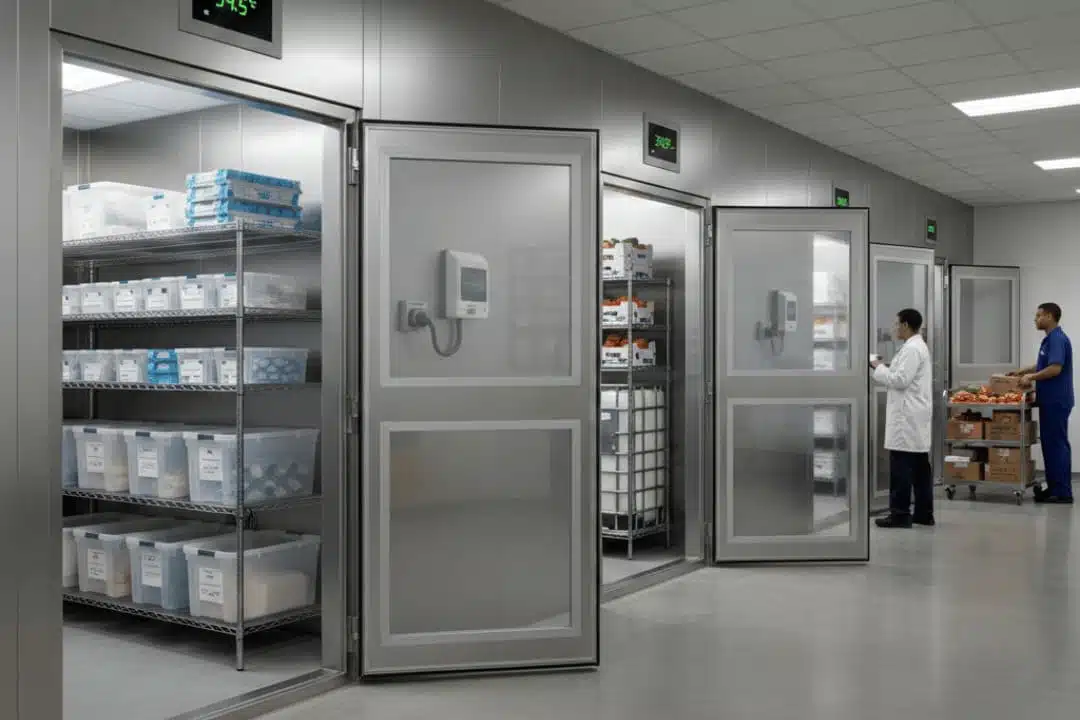
Not all system failures carry the same consequences. Cooling and storage systems introduce time-sensitive risks that escalate rapidly. When temperature stability is compromised, response windows shrink dramatically.
Cooling failures introduce compounding risk because response windows narrow rapidly. As temperature variance increases, facilities must shift from corrective action to loss mitigation. Once this threshold is crossed, restoring the system no longer prevents loss; it only stops further escalation.
Situations that require refrigeration repair place facilities under immediate pressure because product integrity depends on controlled conditions. Once those conditions drift outside acceptable ranges, losses may occur regardless of how quickly systems are restored.
This creates difficult operational decisions involving:
- Inventory relocation
- Temporary storage solutions
- Product disposal or write-offs
The margin for error in these scenarios is narrow, which amplifies both operational and financial risk.
Decision Points During Temperature-Sensitive Equipment Failures
Cooling system failures force facilities to make rapid operational decisions under constrained time windows. These decisions often occur before the full scope of the issue is known.
Common decision points include:
- Whether to continue limited operation or pause production
- Whether inventory should be relocated, isolated, or monitored in place
- When to shift from corrective response to loss mitigation
Once temperature variance exceeds acceptable thresholds, operational options narrow quickly. At that stage, restoring system function may no longer prevent loss; it only limits further escalation. Facilities that understand these thresholds in advance are better positioned to respond decisively rather than reactively.
How System Interruptions Affect Staff Performance
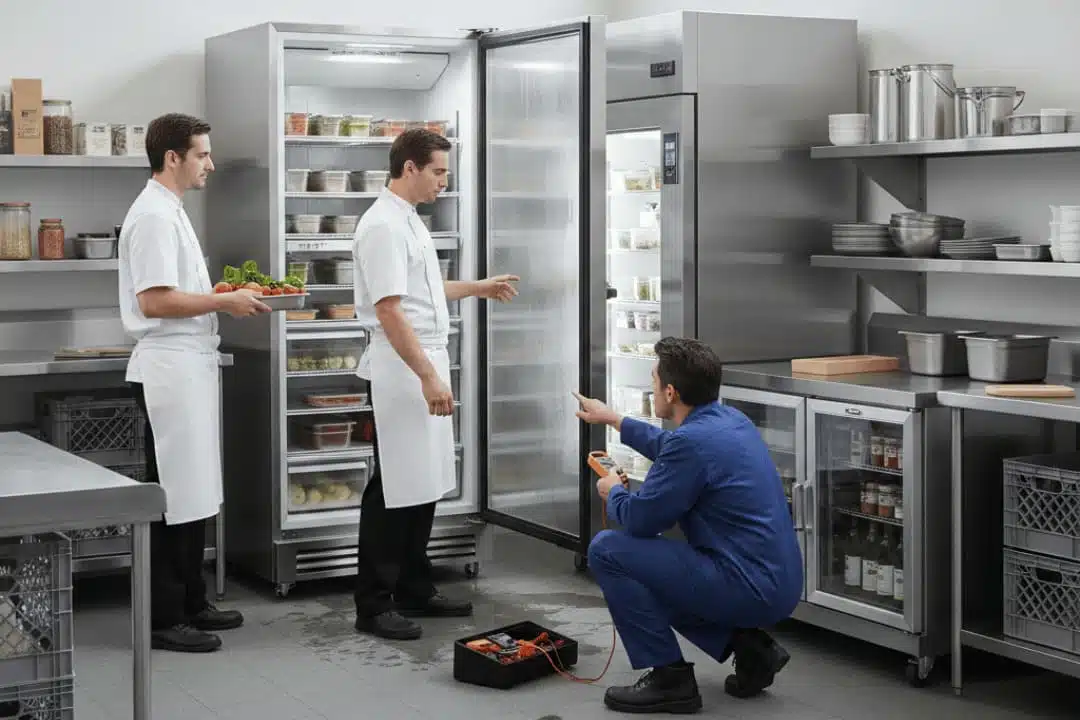
Operational disruption affects people as much as processes. Equipment downtime alters how teams allocate attention, increasing cognitive load during already demanding shifts.
Employees may spend additional time monitoring conditions, documenting workarounds, and double-checking processes. These added demands reduce focus and increase the likelihood of errors, particularly during peak operational periods.
Over time, repeated interruptions can erode morale and make it harder for teams to maintain consistent performance, even after systems return to normal operation.
The Compounding Effect of Repeated Interruptions
Isolated failures are often manageable. Repeated interruptions, however, create patterns that signal deeper issues. Commercial equipment that fails frequently forces facilities into a constant cycle of adjustment.
Each disruption requires operational recalibration, from staffing to scheduling to inventory handling. As these adjustments accumulate, operations become more complex and less efficient.
Recurring instability often leads leadership to accept disruption as “normal,” which masks the true cost of continued inefficiency.
Understanding the True Cost of Recovery Time
Fixing a system does not instantly restore operational stability. Equipment downtime costs continue to accrue during the recovery phase as workflows normalize and confidence is rebuilt.
For leadership teams, recovery time creates planning uncertainty. Managers may delay commitments, restrict throughput, or avoid scheduling high-volume production until system performance is verified. These conservative decisions protect short-term stability but quietly limit revenue potential during recovery windows.
Facilities often need additional time to:
- Rebalance inventory levels
- Verify system performance
- Restore workflow coordination
This recovery period extends the impact of disruption well beyond the initial failure.
How Long Recovery Really Takes After System Downtime
System restoration does not immediately return operations to normal capacity. In most commercial facilities, recovery unfolds in stages rather than as a single event.
Typical recovery phases include:
- Initial stabilization, where systems are restored to safe operating ranges
- Verification period, during which performance consistency is monitored
- Operational normalization, as workflows gradually return to full throughput
Depending on system complexity and operational dependency, full recovery may take hours to several days beyond the point of mechanical repair. During this period, leadership often limits production volume, delays commitments, or maintains contingency staffing, extending the financial impact of the original failure.
Understanding recovery timelines allows facilities to plan more accurately and avoid compounding losses during post-repair uncertainty.
Planning for Resilience Instead of Reacting to Failure
While interruptions cannot be eliminated entirely, their impact can be significantly reduced through awareness and preparation. Equipment downtime becomes easier to manage when organizations understand how systems support daily operations and where vulnerabilities exist.
Facilities with higher operational maturity tend to distinguish between system failure and system degradation. Rather than waiting for complete outages, they monitor performance drift and adjust workflows before downtime becomes disruptive.
Facilities that document response protocols and clarify responsibilities respond faster and with less confusion. This preparedness limits the duration and severity of disruption.
Proactive attention to system health reduces reliance on emergency response and shortens recovery timelines.
Practical Steps Facilities Use to Reduce Downtime Impact
Facilities that experience fewer severe disruptions often share similar preparation habits. Rather than relying solely on emergency response, they build awareness around system behavior and operational dependencies.
Common mitigation practices include:
- Monitoring performance drift instead of waiting for full system failure
- Documenting response protocols for different failure scenarios
- Clarifying roles and decision authority during disruptions
- Scheduling preventative evaluations for high-risk systems
These measures do not eliminate equipment downtime, but they significantly reduce confusion, response delays, and recovery duration when failures occur.
The Strategic Role of System Awareness
Organizations that evaluate how commercial equipment supports critical workflows gain clearer insight into operational risk. This awareness allows leadership to prioritize stability alongside growth and efficiency.
Understanding interdependencies between systems helps facilities anticipate how a single failure may ripple across operations. This perspective supports smarter planning and more resilient decision-making.
Long-Term Business Implications of Operational Instability
Beyond immediate disruption, instability affects long-term performance. Equipment downtime costs influence scalability, competitiveness, and customer confidence.
Facilities that experience frequent interruptions may hesitate to expand operations or take on new commitments. Partners and clients often notice inconsistency before technical explanations are offered.
Stability builds trust. Unpredictability erodes it.
Maintaining Balance Through System Reliability
Operational balance depends on systems that perform consistently under real-world conditions. Commercial equipment reliability supports smoother workflows, better inventory control, and more confident planning.
When systems function as expected, teams can focus on improvement rather than damage control. Reliability shifts attention from crisis management to performance optimization.
Working With Elite Refrigeration Service Inc. to Reduce Operational Disruption
Understanding Experience, Safety, and System Reliability
Commercial facilities rely on stable mechanical systems to protect productivity, inventory, and long-term planning. Understanding how operational interruptions affect workflows and revenue allows decision-makers to recognize risk early and evaluate system needs with greater confidence.
Elite Refrigeration Service Inc. is led by owner Tom Ernst and brings over 40 years of industry experience supporting commercial HVAC and refrigeration environments. That experience is reinforced through extensive credentials, including Universal EPA Certification, EPA 608 Certification for small appliance A/C and refrigeration, EPA-certified preventative maintenance training, Danfoss Silver Certification, CPC (Computer Process Controls) Certification, Mitsubishi City-Multi and Diamond Builder certifications, OSHA safety certification, and required NYC Fire Guard and burn permit credentials.
Facilities evaluating how maintenance planning, system reliability, and refrigeration repair timing affect operational stability benefit from insight that connects system performance with real operational outcomes. Elite Refrigeration Service Inc.’s four decades of commercial HVAC and refrigeration experience support decision-makers seeking clarity around risk, recovery planning, and long-term system reliability. Learn more about how Elite Refrigeration Service Inc. supports informed, reliability-focused decision-making.