When it comes to refrigeration systems whether in a supermarket, restaurant, or industrial facility maintenance often becomes an afterthought until something goes wrong. For many business owners, realizing the cost of system failure often happens too late: spoiled goods, halted operations, and expensive emergency repairs.
This is why understanding how often to schedule refrigeration maintenance can make the difference between seamless performance and costly downtime.
Refrigeration systems are intricate machines that depend on continuous efficiency to maintain consistent temperature control. In this guide, readers will learn how frequently refrigeration maintenance should be scheduled, what factors influence the timing, the key steps involved in a professional maintenance visit, and how Elite Refrigeration Services Inc structures its preventive maintenance programs to help clients avoid major issues.
For more information on professional refrigeration services, visit Elite Refrigeration’s Refrigeration Service Page to explore tailored solutions that ensure optimal system performance.
Why Regular Refrigeration Maintenance Is Essential
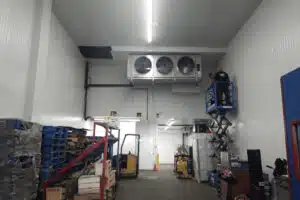
Refrigeration units work around the clock, ensuring that temperature-sensitive products stay safe, compliant, and fresh. Over time, dirt buildup, vibration, fluctuating pressure levels, and worn parts can reduce performance. Without routine care, these small issues can escalate into full system breakdowns.
The real cost of neglecting maintenance isn’t just the repair bill, it’s the lost inventory, operational disruption, and stress that accompany a refrigeration failure. Businesses that commit to regular refrigeration maintenance benefit from:
- Longer equipment lifespan through early detection of wear
- Reduced energy consumption thanks to clean coils and optimized performance
- Stable temperature control, preventing spoilage and regulatory risks
- Fewer emergency repairs and lower overall costs
When done on a consistent schedule, refrigeration maintenance becomes a proactive investment rather than a reactive expense.
Recommended Frequency: How Often Should You Schedule Refrigeration Maintenance?
There isn’t a universal answer because each system operates under different loads, environmental conditions, and usage patterns. However, industry best practices provide a general framework:
| Component / System | Recommended Frequency | Purpose |
|---|---|---|
| Visual inspection & cleaning | Monthly or quarterly | Early detection of dirt buildup and leaks |
| Preventive maintenance service | Every 3–6 months | Full system evaluation and part replacement |
| Deep maintenance & calibration | Twice a year | Ensures peak efficiency and accurate control |
| Performance audit | Once a year | Validates energy efficiency and reliability |
For most commercial and industrial systems, quarterly maintenance (every three months) strikes a good balance between preventive care and operational practicality. Systems that run continuously or operate in harsh environments like cold storage facilities or large supermarkets may require monthly checkups to minimize risks.
What Factors Influence Refrigeration Maintenance Frequency?
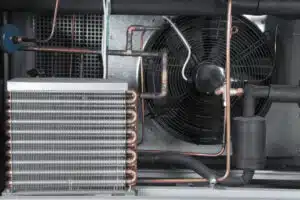
Determining the right maintenance interval depends on several factors. Here’s what experts consider when building a maintenance schedule:
1. System Size and Complexity
Larger and more complex systems have multiple compressors, evaporators, and control points that require closer monitoring. Smaller, standalone units may not need frequent checks.
2. Operating Hours and Load
Systems that run 24/7 or handle heavy cooling loads experience more wear. These high-duty systems benefit from shorter intervals between maintenance visits.
3. Environmental Conditions
Dust, humidity, and airborne contaminants can clog coils and restrict airflow, forcing the system to work harder. Locations with poor ventilation or debris exposure should schedule maintenance more often.
4. Refrigerant Type and System Age
Older systems or those using legacy refrigerants may experience leaks or pressure inconsistencies more frequently. Regular monitoring ensures compliance and prevents refrigerant loss.
5. Regulatory Requirements
Industries such as food processing, pharmaceuticals, and laboratories must comply with specific health and safety regulations that mandate periodic inspections and documentation.
6. Maintenance History
If a system has a record of recurring issues, it’s wise to tighten the maintenance cycle until reliability stabilizes.
What Happens During a Refrigeration Maintenance Visit?
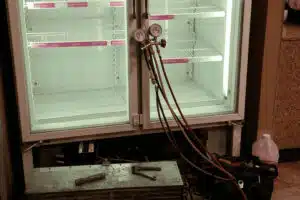
Understanding what happens during a maintenance visit helps businesses see the value behind every inspection. A professional refrigeration maintenance checklist typically includes three service tiers: basic, preventive, and full audit.
Quarterly Maintenance Checklist
- Inspect compressors, evaporators, and coils for cleanliness or damage
- Check refrigerant levels, suction pressure, and discharge pressure
- Clean or replace filters
- Inspect electrical wiring and tighten loose connections
- Lubricate fan and motor bearings
- Inspect belts, pulleys, and insulation
- Check for vibration or abnormal noise
- Verify thermostat and control sensor operation
- Clean condensate pans and ensure proper drainage
Biannual (Twice a Year) Preventive Maintenance
- Perform comprehensive coil cleaning (evaporator and condenser)
- Test for refrigerant leaks
- Calibrate sensors and thermostats
- Inspect and clean condenser fans and blades
- Replace worn or aging components
- Run system under full load to detect irregularities
Annual Performance Audit
- Conduct energy consumption analysis
- Review maintenance logs and performance data
- Evaluate system efficiency compared to design specifications
- Recommend upgrades or retrofits if needed
By combining these tiers, a facility can ensure that every part of the system from mechanical components to electronic controls remains in sync and efficient throughout the year.
Practical Scenarios: How Maintenance Frequency Changes

To illustrate how different environments affect maintenance schedules, here are three examples.
Scenario A: Small Café Walk-In Cooler
A small café’s single-compressor cooler operates 10-12 hours per day indoors. In this case, a quarterly inspection and a deep cleaning twice a year typically suffice.
Maintenance frequency: every three months with annual calibration.
Scenario B: Food Distribution Cold Storage Warehouse
A warehouse operating 24/7 with multiple compressors requires more rigorous oversight. Dust, constant cycling, and heavy usage justify monthly inspections and quarterly preventive service.
Maintenance frequency: monthly checks + quarterly servicing.
Scenario C: Pharmaceutical Laboratory Refrigeration
A mid size lab requires precise temperature control. Even small drifts are unacceptable, so technicians perform bimonthly inspections and quarterly preventive maintenance, with a full audit once per year.
Maintenance frequency: every two months + quarterly service + annual audit.
Elite Refrigeration’s Approach to Maintenance Scheduling
Elite Refrigeration Services Inc takes a data-driven and client-focused approach to refrigeration maintenance. Rather than relying on a one size fits all plan, the company customizes its service intervals based on system type, load demand, and industry requirements.
Here’s what sets their process apart:
- Tiered Maintenance Packages – Clients can choose from basic inspection packages to comprehensive service plans that include performance audits and system optimization.
- Proactive Fault Detection – Their technicians use advanced diagnostic tools to identify issues before breakdowns occur.
- Detailed Maintenance Logs – Each service includes a digital record of readings, adjustments, and recommendations for future service.
- Emergency Response Integration – In addition to scheduled maintenance, Elite Refrigeration Services Inc offers 24/7 emergency response to handle unexpected failures.
- Energy Efficiency Upgrades – During scheduled maintenance, the team also advises clients on system retrofits and upgrades to improve efficiency.
By following Elite Refrigeration’s model, businesses can move from reactive repairs to predictive maintenance saving both time and cost while maximizing system uptime.
To explore service details, readers can visit Elite Refrigeration’s Maintenance and Repair Services.
Optimizing Maintenance Timing and Workflow
Once the recommended maintenance frequency is set, proper scheduling and documentation make the process sustainable. Here are proven strategies technicians and facility managers can use:
- Conduct a Baseline Audit Before finalizing a schedule, assess the entire system. Identify weak spots, aging components, and performance trends.
- Track Energy Usage and System Metrics Use historical data to monitor shifts in energy consumption, temperature consistency, and pressure readings. Deviations signal it’s time for earlier maintenance.
- Adjust Based on Seasonal Load
Cooling systems work hardest in warmer months. Increasing inspection frequency before summer ensures reliability when the system operates at full capacity. - Prioritize Critical Equipment
Not all systems need equal attention. Identify high-priority units (such as freezer compressors or main cold rooms) and service them more often. - Combine Preventive and Predictive Maintenance
Predictive technology like IoT sensors can alert technicians to anomalies before they become failures, extending the interval between manual checks without sacrificing safety. - Reevaluate Annually
After a year of consistent maintenance, review performance data and adjust the schedule to optimize frequency and cost.
This systematic approach helps align maintenance timing with actual operational needs instead of fixed calendar dates.
Sample Annual Refrigeration Maintenance Calendar
| Month | Activity | Purpose |
|---|---|---|
| January | Full system audit | Benchmark performance, reset maintenance plan |
| March | Preventive maintenance | Replace filters, check electrical and refrigerant levels |
| June | Deep cleaning | Clean coils, fans, and heat exchangers before summer load |
| September | Preventive maintenance | Recalibrate sensors and controls |
| December | Year-end inspection | Review data and prepare for the new operational year |
This schedule can be adapted based on system intensity and environmental factors. Facilities with continuous operations should insert brief monthly checks between major visits.
Elite Refrigeration’s Preventive Maintenance Benefits
Regular refrigeration maintenance with Elite Refrigeration helps ensure long-term performance and minimal downtime. Clients who maintain consistent service schedules experience:
- Lower utility bills due to optimized system efficiency
- Fewer equipment malfunctions and costly emergency calls
- Extended equipment lifespan through timely part replacement
- Improved temperature regulation and product safety
- Documentation for compliance and audit readiness
Elite’s professional technicians combine preventive care with energy efficiency consulting, helping clients cut costs while maintaining dependable refrigeration performance.
FAQs: How Often Should You Schedule Refrigeration Maintenance?
Q1: Is once a year maintenance enough for commercial systems?
For light duty applications, annual servicing may suffice, but commercial and industrial refrigeration systems benefit from quarterly or biannual maintenance to maintain efficiency and compliance.
Q2: What happens if refrigeration maintenance is skipped?
Skipping maintenance leads to dirty coils, refrigerant leaks, higher energy costs, and potential system failure. Regular servicing minimizes these risks.
Q3: How much does a typical maintenance visit cost?
Costs vary depending on system size, accessibility, and service depth. Preventive visits are generally far more affordable than emergency repair calls.
Q4: Can businesses perform refrigeration maintenance in-house?
Basic cleaning tasks can be handled internally, but refrigerant handling, leak detection, and electrical inspections should always be done by certified technicians.
Q5: What’s the best time of year to schedule refrigeration maintenance?
Spring and fall are ideal since systems aren’t under maximum seasonal load, allowing technicians to prepare equipment for temperature extremes ahead.
Q6: Does Elite Refrigeration provide emergency repair alongside maintenance?
Yes. Elite Refrigeration Services Inc offers both scheduled maintenance and 24/7 emergency repair services, ensuring clients receive fast, reliable support when unexpected failures occur.
Schedule Refrigeration Maintenance with Elite Refrigeration Today
For businesses that rely on cold storage, display cases, or industrial refrigeration systems, waiting for problems to appear isn’t an option. Elite Refrigeration Services Inc provides customized maintenance plans that match the operational needs of each client ensuring systems run efficiently and reliably all year long.
Need help deciding how often to schedule refrigeration maintenance?
Contact Elite Refrigeration today to schedule a professional system evaluation and create a tailored maintenance plan that prevents breakdowns before they happen.